

EdA Esempi di Architettura and AGENDA 2030
HERE MORE INFORMATION ABOUT INTERNATIONAL CALLS
PARTNER NEW EUROPEAN BAUHAUS
——————————————–
——————————————–
EDA, PUBLICATIONS WITH PEER REVIEW
ISSN [print version]: 2384-9576 | MIUR E211002
ISSN [electronic version]: 2035-7982 | MIUR E199789
INTERNATIONAL JOURNAL OF ARCHITECTURE AND ENGINEERING
ANVUR – SCIENTIFIC JOURNAL
Director | Editor-in-Chief Prof. Dr. Olimpia Niglio
member Directory Open Access Journals DOAJ 
 member












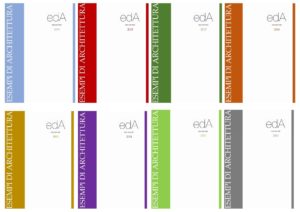
EdA Esempi di Architettura is a scientific project born in 2004 with the aim of promoting knowledge and disseminating the results of research activities carried out in the academic field. In tune with the mission of UNESCO “Towards Knowledge Societies” the main objective is the adoption of neutrality in the choice and evaluation of these researches and the scientific rigor in their drafting and proposes to investigate critically and creatively the knowledge. The choice of the publication involves first the director of the editorial project, the board members and therefore scientific Committee both national and international according to their respective scientific skills and the external auditors chose at both national and international academies. EdA Esempi di Architettura is a multidisciplinary and multilingual project so you can also present publications in other languages in addition to Italian and English. In collaboration with Aracne Editrice, it undertakes to enforce the rules of ethical behavior at all stages of the publishing process. EdA Esempi di Architettura through its internal organs promotes and monitors Peer review operations as a method of selecting articles, providing a mandatory form for reporting. EdA promotes the independence of research activities, condemns copyright infringement and plagiarism, requires and publishes only original contributions, and written in compliance with the editorial guideline. These guidelines apply to both printed and Open Access publications.
EdA Esempi di Architettura [digital version ISSN 2035-7982]
EdA Esempi di Architettura [print version ISSN 2384-9576]
Il Prato Publishing House [2007-2009]
The scientific and cultural project EDA has identified its aim in the thought of Werner Heisenberg, Nobel Prize for the Physics in 1932
[…] It is probably true quite generally that in the history of human thinking the most fruitful developments frequently take place at those points where two different lines of thought meet. These lines may have their roots in quite different parts of human culture, in different times or different cultural environments or different religious traditions: hence if they actually meet, that is, if they are at least so much related to each other that a real interaction can take place, then one may hope that new and interesting developments may follow.
[2007] The International Journal EdA Esempi di Architettura was founded in 2007. The Journal with the requirement of “peer review”, was created to disseminate scientific papers published by universities and research institutes, in order to focus attention on the critical reading of the projects. The intention is to create a place for a cultural debate on interdisciplinary topics, with the aim to investigate issues related to different fields of study ranging from history, restoration, architectural and structural design, technology, landscape, and the city.
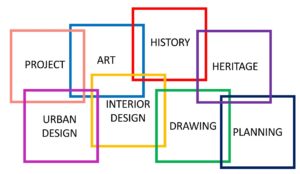
EdA International Journal is composed of eight scientific sections [link]
Languages | English and Italian. Other languages authorized: Spanish, French, and German (always with title and abstract in English)
Frequency | semiannual (with International Call)